Hilton Gold Bracelet

©Bryan Phillips Jul 2024

GREAT NEWS! DORSET MUSEUM HAVE RAISED THE FUNDS TO PURCHASE THIS.

photo © Somerset County Council 2.0 Generic.

This late Bronze Age gold bracelet was found in Hilton. It has been declared treasure and has been valued at £1200. The Dorset Museum is in the process of acquiring it but need our help in raising a little more. Please donate here.It would be great to know that it will then be available for everyone to view instead of being locked away by a private collector in some safe deposit box.

The full Portable Antiquities Scheme description of this bracelet.

This is an important piece of our history. We know of a gold torc that was also found in Hilton in the 19th century and handed to Lady Caroline Damer. What happened to it then we do not know, it may still be with the Dawson-Damer descendants. 

It would be great to know what was happening in Hilton in the late Bronze Age, the gold objects raise so many questions. Where is the gold from? How was it traded? Why was it buried? For a funerary rite? Are there more gold objects to be found? Only archaeology and more research could tell us.

Posted in archaeology, Damer, local, Metal Detecting | Leave a comment

Will of Edward Damer, 1703

©Bryan Phillips Jul 2024 

Wills and inventories are a marvellous source of information for local and family historians. Our super transcriber Shirley Chick has just completed the will of Edward Damer 1703. This gives a wealth of information on the Damer family fifty years before Joseph bought the Milton Abbas estate in 1752.

Here is just a fraction:

“…. my Cousin John Trevillian, my son in Law Thomas Pittman and Joseph Damer the son of my rother George Damer, joyntly and to the survivor of them in trust, for the use and behoofe of Edward  Damer my grandson when he shall attain the age of Twenty one years or is marryed by the consent of the said trustees for his life, and ~ the Issue Male of his body lawfully to be begotten; and failing such ~ issue I give and bequeath my said house to my said Trustees and the survivor of them to the use and behoofe of my grandchild Edw(ard): Pittman in like sort, and to the heirs male of his body lawfully to be begotten ~ and fayling such issue; I give and bequeath my said house to my said Trustees to the use of my grandchild Joseph the son of my Son Joseph Damer deceased and to the Issue male of his body a ~ lawfully to be begotten and failing such issue then to the use and behoofe of my right heirs for ever Item give unto my Sister Mary Yeat twenty Shillings 20 and to be paid to her during her life also I give unto y cousin Samuell Damer and my Cousin Robert Colmer to each of them Five pounds; also I give to my sister in Law Joan Jefferyse   “

We were hoping that a descendant of the Damer family might help us by writing a history of this important and wealthy Dorset family. We have already gathered a huge quantity of information.

If anyone is interested please contact us here.

Posted in Damer, document, family history, local history, Old Town of Milton Abbas, transcription | Leave a comment

Terry-Thomas

©Bryan Phillips Jul 2024 

At last! We can be fairly sure that Terry-Thomas did have a house in Milton Abbas. See our blog. So that is one mystery solved, at least partly, because we do not yet know which property he had, nor when it was bought and sold. One of our correspondents pointed out that Norman Scott, of Jeremy Thorpe infamy, used this house for his honeymoon in May 1969. According to the book ‘A Very English Scandal’, by John Preston page 113, Terry-Thomas loaned it rent free to Norman. Unfortunately the book’s author, a journalist for the Sunday Telegraph, gives no reference, so we cannot confirm this.

Perhaps the newspapers of the time might give us more information.

If you are interested to learn more about the tragic life story of Terry-Thomas see Yahoo! Movies.

We are still looking for confirmation that Diana Dors had a place here.

Posted in books, local history, Milton Abbas | Leave a comment

The Lives of Ordinary People

©Bryan Phillips Jun 2024 

A recent article by Ruth Goodman in Who Do You Think You are? July 2024 p20 asks why the educational curriculum for history is full of Hitler, Napoleon, and Britain’s kings and queens. Where are the ordinary people? 

Perhaps we should be studying how the things that did change lives arose. How did clean water, electric light, antibiotics, surgery, paper, money, concrete, tea, coffee, metals come to be invented and distributed?

All family historians and local historians know that the vast majority of people had a real struggle just to get through life and, if lucky, have some children. Every one of us has a very long line of ordinary people as ancestors who have met with difficulties and overcome them, from slums, to poor health, malnutrition, prison, injustice, slavery, war and many other vicissitudes. How did they cope? What did they do – migrate, delay childbirth, work from dawn to dusk?

Take Milton Abbas as an example. We know that three kings visited here – Athelstan in 934, George III in 1789 and Edward VII in 1909. What impact did they have on our lives? Certainly the most recent two made very little positive contribution to our society. In fact, it could be argued that we would have been much better off without them! Perhaps wealth would have been more evenly distributed throughout history with better wages allowing our agricultural labourers to have better nutrition and avoid the workhouse and handouts from the Overseers which our records show.. Perhaps also the lords of our manor should have made sure their workers had a supply of clean water which would have avoided the diseases such as typhus that we know afflicted the tenants in Hilton in 1848, or better housing to avoid the severe overcrowding we know was the case in local villages. Certainly the study of local and family history shows how important child survival and rearing and the caring roles in society are.

A broader history curriculum with a wider selection of voices might help us improve society which is surely the aim of such education.

One current GCSE curriculum is here. This does include an option ‘Britain: Health and the people: c1000 to the present day.’

Tell us what you think here.

Posted in local history, Milton Abbas, Overseers of the Poor, social history | Leave a comment

Drowning of William Ridout in Bournemouth

©Bryan Phillips June 2024

The Ridout or Rideout family had been living in Milton Abbas for at least 150 years and occur frequently in our Records including prison admission, Overseers of the Poor, Settlement Examinations, when a young Willian Ridout met a sad end.

This is the report in the Hampshire Chronicle 31 May 1884:

DROWNED WHILST BATHING. Mr. J. Drewett held an inquest at the Halfway Coffee house, Boscombe, on Monday, touching the death of William Ridout, a bricklayer, aged 23 years. The deceased, it seemed, had on Saturday swam about for some time, when he threw up his hands and disappeared. Mr. H. Severn, in the employ of the London and South-Western Railway Company, on reaching the spot, swam out, dived, and brought deceased to the surface, but he was too late to save Ridout’s life. His gallant effort, however, received the commendation of the coroner. A verdict of Accidental death” was returned.

William was buried in Milton Abbas and here is the entry in the burial register:

Why not share your stories about your ancestors from Milton Abbas. Contact us.

Posted in family history, local history, Overseers of the Poor, Parish Registers, records | Leave a comment

D-Day and the 1939 Register

©Bryan Phillips May 2024 

With the 80th anniversary of D-Day the Milton Abbas Local History Group have the resources to track the people involved from Milton Abbas. We have

  • The 1939 Register fully transcribed into a spreadsheet. This includes some of the NAAFI personnel who were billeted in the lake field.
  • Some memories, including one of the ‘kindergarten transport’ who came to Milton Abbas.
  • The Women’s Institute war record book, also fully transcribed, and noting that a regiment was billeted in Milton Abbas which joined the British Expeditionary Force.

Why not share your findings with us? Contact us.

Posted in document, local history, Milton Abbas, records, transcription, WW2 | Leave a comment

One Place Studies

©Bryan Phillips May 2024

If you have an ancestor who came from Milton Abbas at any time in the past going as far back as 1317 then you are in luck! We have already done the research that you need to tell their story.

We have already explored house history.

A recent check list of place based research is given in Family Tree May 2024, p19 by Chris Paton.

  • create a database of records relevant to the period and occupations relevant to the ancestral focus of your own project (this is a list that you can add to as your research progresses); – The Milton Abbas Local History Group have a database of 5350 records which is available to our members.
  • undertake background reading, to learn about the local area (occupations, opportunities, challenges, local resources, education, geography, transport etc); – Our Library and documents have all the information you need. You will need to be a member to access them.
  • appraise the wider history of the time (what other events may have impacted your ancestors’ lives – war, economic changes etc); – We have over 200 GB of digital documents, photos, postcards, books etc
  • study archive catalogues to find collections not available digitally; research the wider community, to gain a broader picture of the people of the time (occupations, epidemics, religions, birth locations, local landowners etc); We have already done the searching for you – Dorset History Centre, Wilts & Swindon Archive, British Newspaper Archives, The National Archives, Ancestry, Find my Past, Society of Genealogists, Parliamentary Archives, The London Gazette and many others. 
  • consider reasons why your family may have moved away from/to the area; – Please tell us, we would be very interested to know! We already have members in Canada, USA and Australia who have ancestors from Milton Abbas and stories to tell.
  • research maps and images to bring the location as it was in your ancestors’ time to life; We have high resolution digital copies of maps starting from 1652.
  • write up your research (you may wish to share it online, to help others researching ancestors in the same/similar circumstances). See our Memories page and add your story to it.
  • plan a visit! – see this amazing place and learn more of its history. Many of our members have walked and photographed it.

Contact us

Posted in books, Churchwardens, document, Dorset, family history, local, local history, Milton Abbas, Old Town of Milton Abbas, Overseers of the Poor, Parish Registers, social history | Leave a comment

Lyscombe

©Bryan Phillips Apr 2024

Another phase in the history of Lyscombe has just opened up – literally. 335 hectares of chalk downland has been purchased by, and will be managed for rewilding by Dorset Wildlife Trust. For details see their website.

Lyscombe is an Old English word for ‘valley where reeds grow’.

The earliest we know of the manor of Lyscombe was the grant by King Athelstan in 934 to Milton Abbey.  Its written records are noted in the Manorial Document Register and are mostly located at Winchester College Muniments where we have photographed some of them. There is also an Anglo-Saxon charter of the bounds of Cheselbourne which was itself owned by Shaftesbury Abbey at the time. The boundaries of Lyscombe are also given in one of the Milton Abbey 14th century documents which we images of..

image Rosalyn Charlton

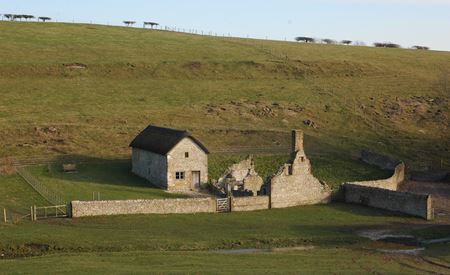
Lyscombe Chapel was derelict but has recently been restored. It is a Grade II* listed building. It is worth visiting as it is in a secluded valley and provides a beautiful walk in the countryside.

Posted in history, local history, Medieval history | Leave a comment

The Sale of Hilton manor to Lord Milton 1784

© Bryan Phillips Apr 2024

We have obtained some high resolution images of the deed of sale of the village of Hilton to Lord Milton. This was dated 15 May 1784, and there are twenty large pages of it. One of our super transcribers is working their way through it and like many eighteenth-century legal documents it is exceedingly tedious. However, it is full of wonderful detail of the village of Hilton at this time.

The sale price was £25 000, which shows just how wealthy Lord Milton was at this time. He also bought Winterborne Stickland! So definitely a man of means. His income we know at this time was about £6 000 per annum from his Milton Abbas estate and a similar amount from his Irish estate. His three sons unfortunately were not inclined to follow his example and the eldest son John ran up so much debt that he shot himself, and the remaining eldest son, George, owed over £100 000 when he inherited the title (but not the estates) in 1798. The will of Lord Milton is especially interesting because he disinherited his sons and left everything to his beloved daughter, Caroline, named after her mother.

I would like to thank all of our transcribers who have worked so hard to bring to life the story of Milton Abbas. We are still working on some of the stories, for instance the Tregonwell and Bancks families and their legal disputes over the inheritance of Milton Abbas estate; the life of medieval peasants on the Milton Abbey estates in the fourteenth century;

And there are still plenty of jobs that people could help with, see our Jobs to Do page and Contact us if you would like to help.

Posted in Damer, local history, Medieval history, social history, transcription, Tregonwell | Leave a comment

Country Life

© Bryan Phillips Mar 2024

The Country Life archive is now available on British Newspaper Archives and Find my Past. A search for Milton Abbas reveals over 400 records and Milton Abbey 350.

The individual pages of the articles are available as pdf or jpg files. These results will be useful for anyone researching their house history as they will likely find their properties described for sale. Other highlights are the location, with photo, of the well in The Street, how the old doctor’s house was designed by Capability Brown to look without the massive hedge now hiding it, the view across the lake as designed without the trees as now obscuring it, when roe deer were introduced by the Hambros, a pheasant shoot in 1904 and many others. There are also of course major articles on the mansion house including Wyatt and Westmacott designs for furniture, and how the Tregonwells bought Anderson Manor.

Posted in Capability Brown, Damer, Hambro, local history, Tregonwell | Leave a comment