Here is a view of the beaters for the shoot. does anyone have relatives who were estate workers at Milton Abbey in 1909. It would be good if we could recognise any of these men.

Here is a view of the beaters for the shoot. does anyone have relatives who were estate workers at Milton Abbey in 1909. It would be good if we could recognise any of these men.
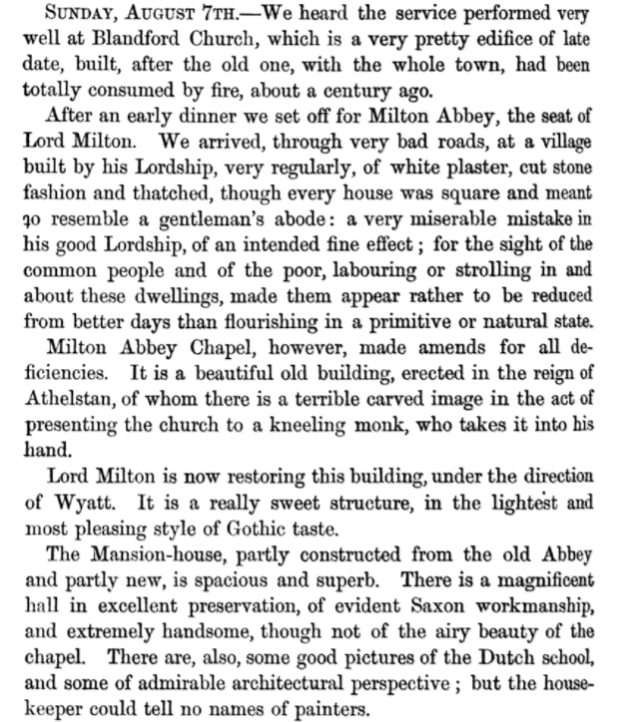
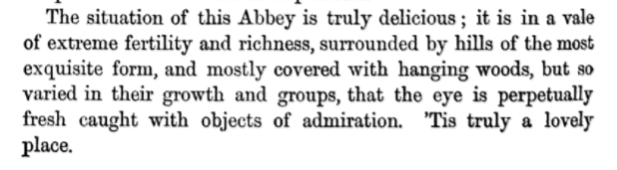
Frances Burney – Madam D’Arblay visited Milton Abbey and Milton Abbas in 1791. She was not too impressed by Lord Milton’s new “town”. This is one of the very few contemporary comments. It is a pity that so few diarists mention Milton Abbas.


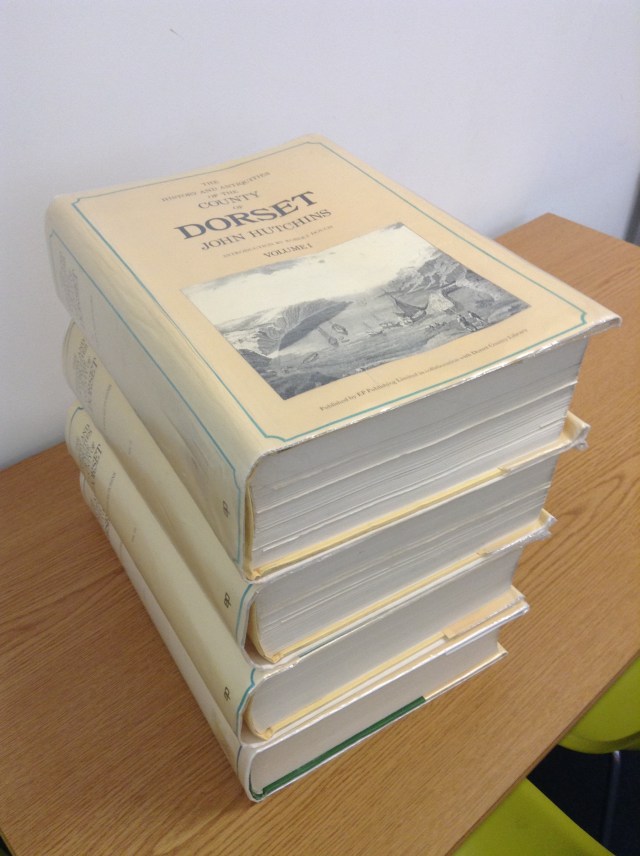
Now here’s a useful little book. It is still available if you know where to look.
The references aren’t very good and some of the information may be hearsay.


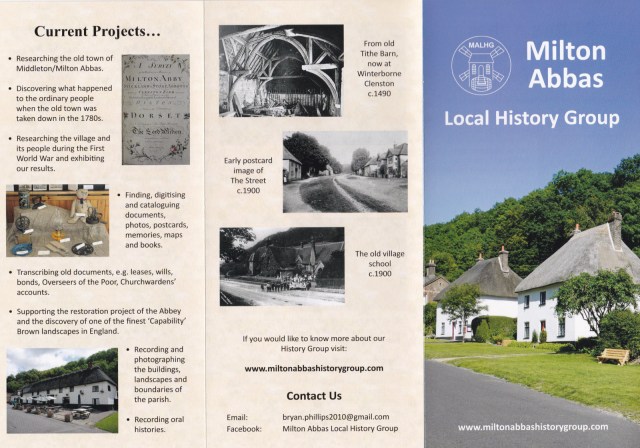
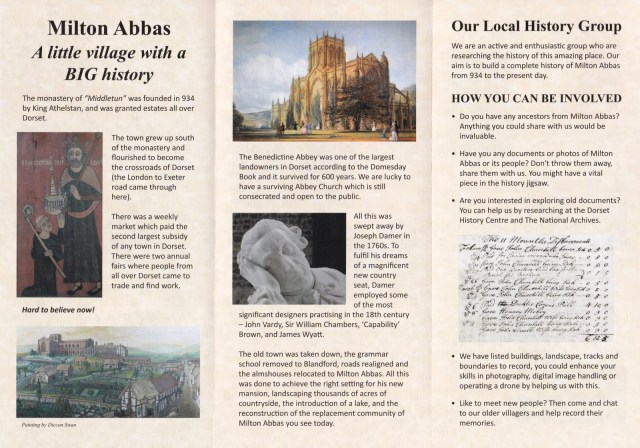
The Milton Abbas Local History Group promotion leaflet is now available in our local area.
It will be available at our exhibit at the Street Fair.

Author Rev. John Hutchins, curate at Milton Abbey.
Published in 3 Editions:
1st Ed, 1774, 2 Vols, Milton Abbas Vol 2, pages 430 – 448. 19 pages
2nd Ed, 1796 – 1815, 4 Vols, Milton Abbas Vol 4, pages 207 – 235, 29 pages
3rd Ed, 1861 – 1873, 4 Vols, Milton Abbas, Vol 4, pages 382 – 413, 32 pages
All 3 editions are available in the Dorset History Centre (DHC).
The 1st edition was photographed from a private collection. The images were manipulated by Rob Curtis in our Workshop.
The 2nd Edition was photographed from the DHC copy.
The 3rd edition is available online as pdf files.
The copy in the photo above is a facsimile of the 3rd Edition published in 1973. It is in the Dorchester Library.
Parish registers in England were first kept in 1538, recording details of baptisms (not births) marriages and burials (not deaths). However the earliest surviving examples are those entered into the new books as ordered in the reign of Elizabeth I in 1598. The earliest we have for Milton Abbas begin in 1650 and are continuous from then on. The Churchwarden’s Books start in 1638 but there are some years missing in the 17th century.
The parish registers have been transcribed by the Online Parish Clerk project and can be read here. I believe that this site is not being kept up any more, but the information is still there for free. It is a vital resource and especially for checking the neighbouring parishes, where people moved, rented, married into or died.
From 1598 the parish incumbents had to make copies of every entry in the Parish Register and send it to the Diocese. These are known as Bishop’s Transcripts. However for Milton Abbas these records have had a very difficult existence. The parish was once part of the Diocese of Bristol and seem to have been lost in WW2 bombing. The existing records only start in 1731. But need to be checked when doing family history.

Author Peter Edwards.
Although out of date – it was published in 1993 – it is a useful summary of the documents that are available which need to be examined to complete a history of a rural parish.

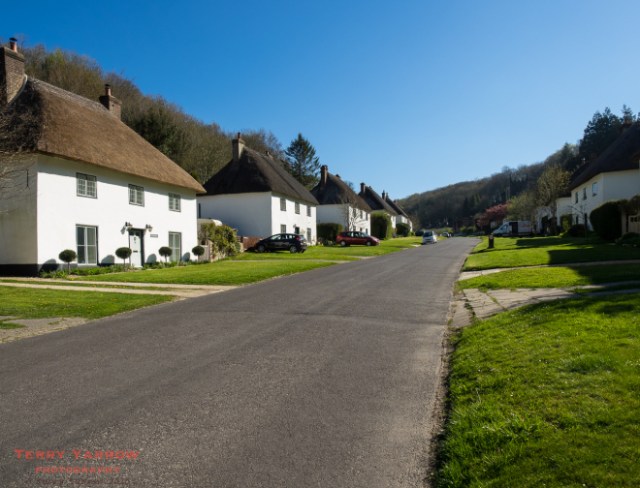
A lovely view of The Street of Milton Abbas nestled in its valley. Unfortunately this is not how Capability Brown intended it. It was meant to be much more open with a clear view from this spot across the lake up the street. This spot would be one of the places where Lord Milton would stop the carriage with his guests to show them how he had housed his estate workers.
Still after 250 years of tree growth, death and regrowth this is the best we can do. Note Capability Brown wanted his lake to be seen and with clear views across it in every direction.

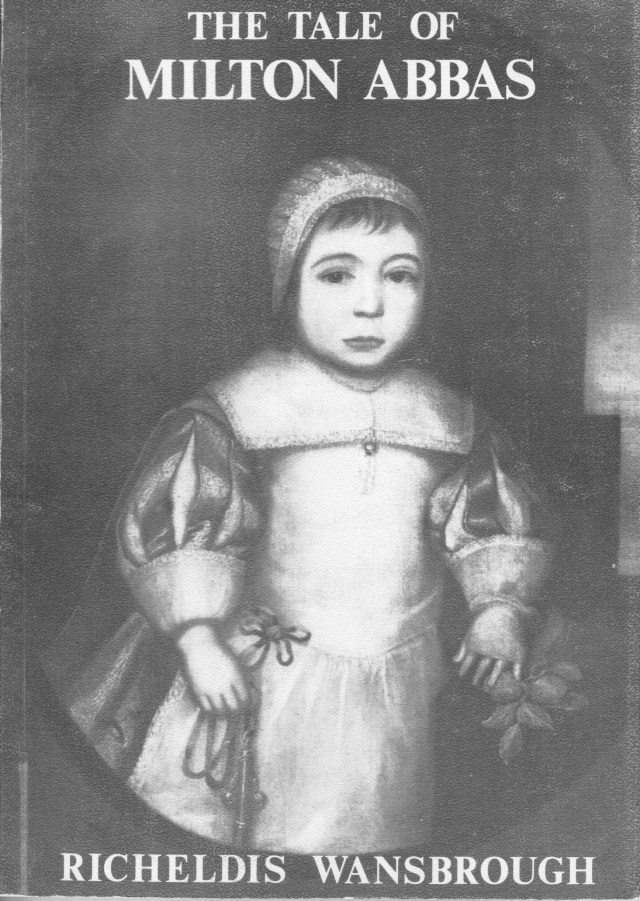
This book is out of date, it was published in 1984, the days before the internet. I borrowed it from Libraries West. It is out of print but can be bought for £0.01 plus p&p.
In spite of this it does help with all the information that is needed to compile a history of Milton Abbas.
I am going through it methodically to check that the Milton Abbas History Group is doing all the right things.

The only remaining evidence of the Anglo-Saxons at Milton Abbas is this stump of a market cross. It has no display board pointing out its importance to the history of the community. It is sad to see such a lack of interest in a once thriving town.