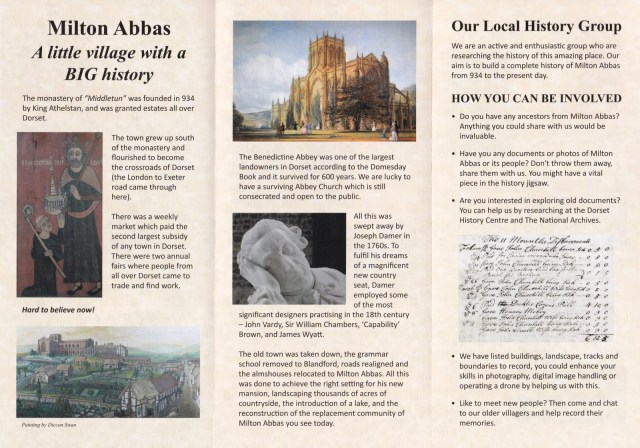
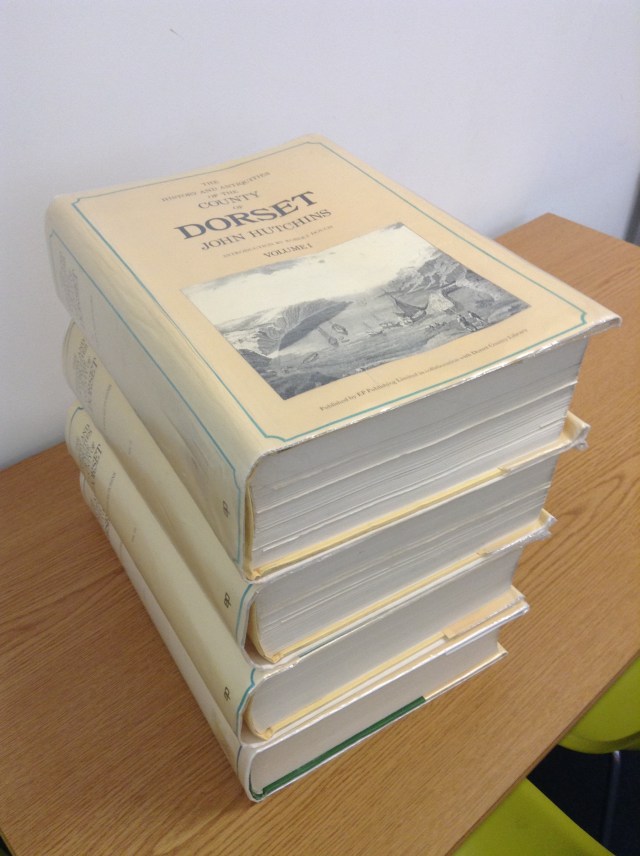
Now here’s a useful little book. It is still available if you know where to look.
The references aren’t very good and some of the information may be hearsay.
Now here’s a useful little book. It is still available if you know where to look.
The references aren’t very good and some of the information may be hearsay.


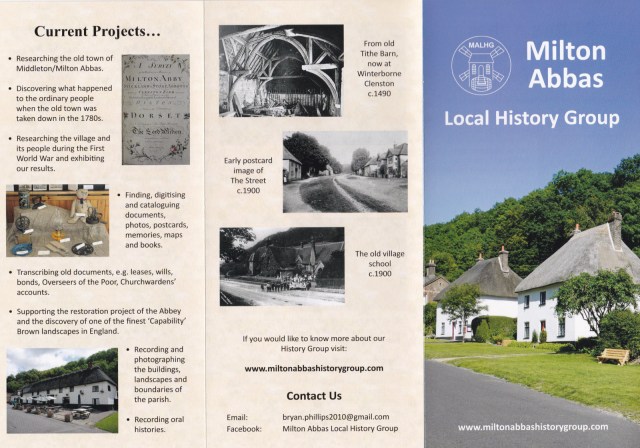
The Milton Abbas Local History Group promotion leaflet is now available in our local area.
It will be available at our exhibit at the Street Fair.

Author Rev. John Hutchins, curate at Milton Abbey.
Published in 3 Editions:
1st Ed, 1774, 2 Vols, Milton Abbas Vol 2, pages 430 – 448. 19 pages
2nd Ed, 1796 – 1815, 4 Vols, Milton Abbas Vol 4, pages 207 – 235, 29 pages
3rd Ed, 1861 – 1873, 4 Vols, Milton Abbas, Vol 4, pages 382 – 413, 32 pages
All 3 editions are available in the Dorset History Centre (DHC).
The 1st edition was photographed from a private collection. The images were manipulated by Rob Curtis in our Workshop.
The 2nd Edition was photographed from the DHC copy.
The 3rd edition is available online as pdf files.
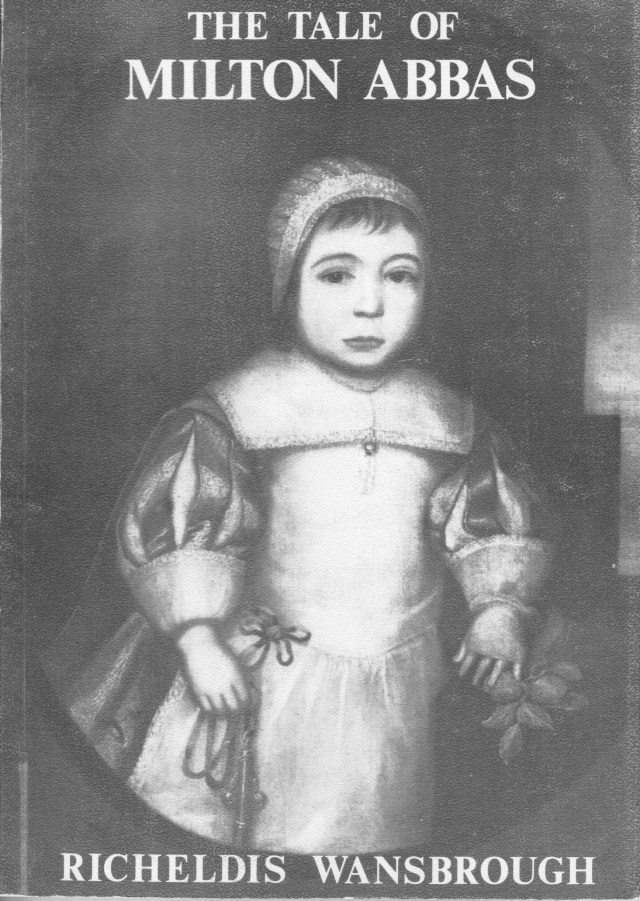
The copy in the photo above is a facsimile of the 3rd Edition published in 1973. It is in the Dorchester Library.
Parish registers in England were first kept in 1538, recording details of baptisms (not births) marriages and burials (not deaths). However the earliest surviving examples are those entered into the new books as ordered in the reign of Elizabeth I in 1598. The earliest we have for Milton Abbas begin in 1650 and are continuous from then on. The Churchwarden’s Books start in 1638 but there are some years missing in the 17th century.
The parish registers have been transcribed by the Online Parish Clerk project and can be read here. I believe that this site is not being kept up any more, but the information is still there for free. It is a vital resource and especially for checking the neighbouring parishes, where people moved, rented, married into or died.
From 1598 the parish incumbents had to make copies of every entry in the Parish Register and send it to the Diocese. These are known as Bishop’s Transcripts. However for Milton Abbas these records have had a very difficult existence. The parish was once part of the Diocese of Bristol and seem to have been lost in WW2 bombing. The existing records only start in 1731. But need to be checked when doing family history.

Author Peter Edwards.
Although out of date – it was published in 1993 – it is a useful summary of the documents that are available which need to be examined to complete a history of a rural parish.

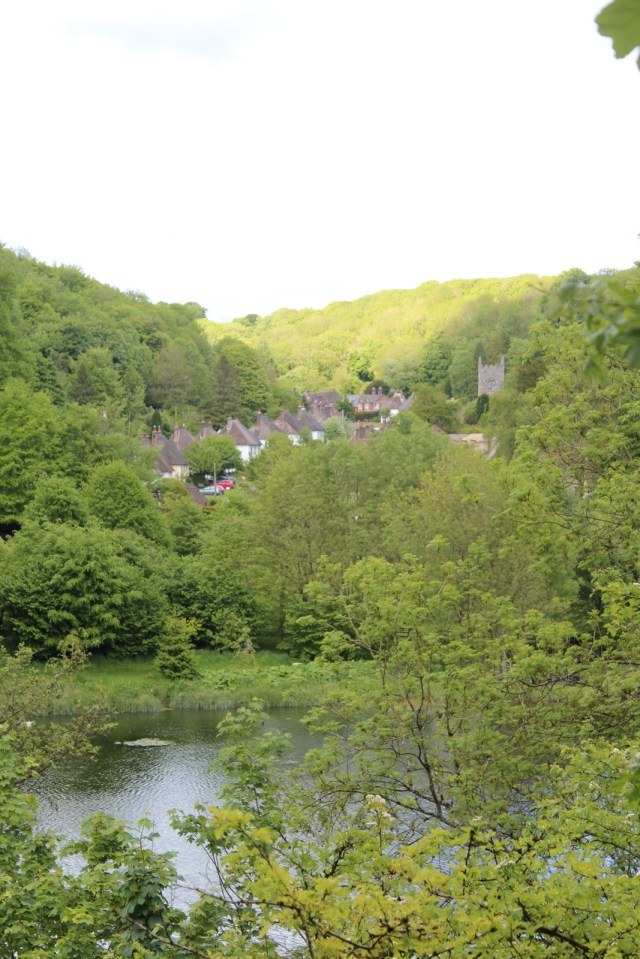
A lovely view of The Street of Milton Abbas nestled in its valley. Unfortunately this is not how Capability Brown intended it. It was meant to be much more open with a clear view from this spot across the lake up the street. This spot would be one of the places where Lord Milton would stop the carriage with his guests to show them how he had housed his estate workers.
Still after 250 years of tree growth, death and regrowth this is the best we can do. Note Capability Brown wanted his lake to be seen and with clear views across it in every direction.

This book is out of date, it was published in 1984, the days before the internet. I borrowed it from Libraries West. It is out of print but can be bought for £0.01 plus p&p.
In spite of this it does help with all the information that is needed to compile a history of Milton Abbas.
I am going through it methodically to check that the Milton Abbas History Group is doing all the right things.

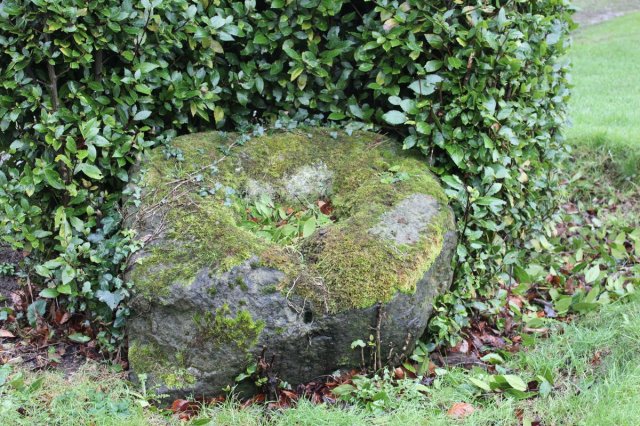
The only remaining evidence of the Anglo-Saxons at Milton Abbas is this stump of a market cross. It has no display board pointing out its importance to the history of the community. It is sad to see such a lack of interest in a once thriving town.
There is precious little evidence that Milton Abbas was occupied in Anglo-Saxon times, but this is one fragment that is definitely of this period. It was in the Abbey with the other stone fragments. I’m not sure where it is now, with the various moves during the refurbishments going on – I”ll look for it.
It seems rather narrow to be part of the shaft of the market cross.
The following is from Corpus of Anglo-Saxon Stone Sculpture South West England, Rosemary Cramp, British Academy, 2006
Part of rounded shaft
PRESENT LOCATION In the abbey church, displayed in a metal frame at west end of south transept when visited in 1992, but not there in 2004
EVIDENCE FOR DISCOVERY None; possibly found during excavations at the west end of the church in 1865 (Roberts 1880, 88-9; (——) 1903, Ixv)
STONE TYPE Yellowish grey (5Y 8/1), dominantly medium-grained, shelly, matrix-supported oolite, with the ooliths weathering out to give an ‘aero-chocolate’ texture; a few stand proud. Shell fragments up to 5 mm across, but no obvious alignment. Bath stone, Chalfield Oolite Formation, Great Oolite Group, Middle Jurassic PRESENT CONDITION Dressed off flat on three sides and broken at each end
DESCRIPTION Part of a rounded shaft with loose median-incised interlace.
DISCUSSION This was originally a rounded shaft like Yetminster (Ills. 153-7). The interlace type does not conform to any geometric type, but this is common in this region: the particularly tangled form here may be compared with Whitcombe (111. 142).
This is an important site with a large land-holding (Hall 2000, fig. 74). Milton Abbey was traditionally founded by King Athelstan (925-40), and was certainly a religious site by 964: see Anglo-Saxon Chronicle MS A, that tells of substitution of monks for priests (Whitelock 1979, 226).
DATE Tenth century(?)
REFERENCES R.C.H.M.(E.) 1970d, xlviii, pi. 12; R.CH.M.(E.) 1970e, 189 (5); Newman and Pevsner 1972, 288
We already have the list of 136 names in Milton Abbas because they were printed in a book edited by Edward Alexander Fry, Dorset Records Vol 12, available for free download at http://www.archive.org, but now images of the original two pages for Milton Abbas are available here
Note that the Arnold family figure prominently in the list of names, but there is no Tregonwell, I don’t know why.
Our next job is to compare these names with those given on the 1652 Byles map.
This period also ties in with the Churchwardens Books that are being transcribed.