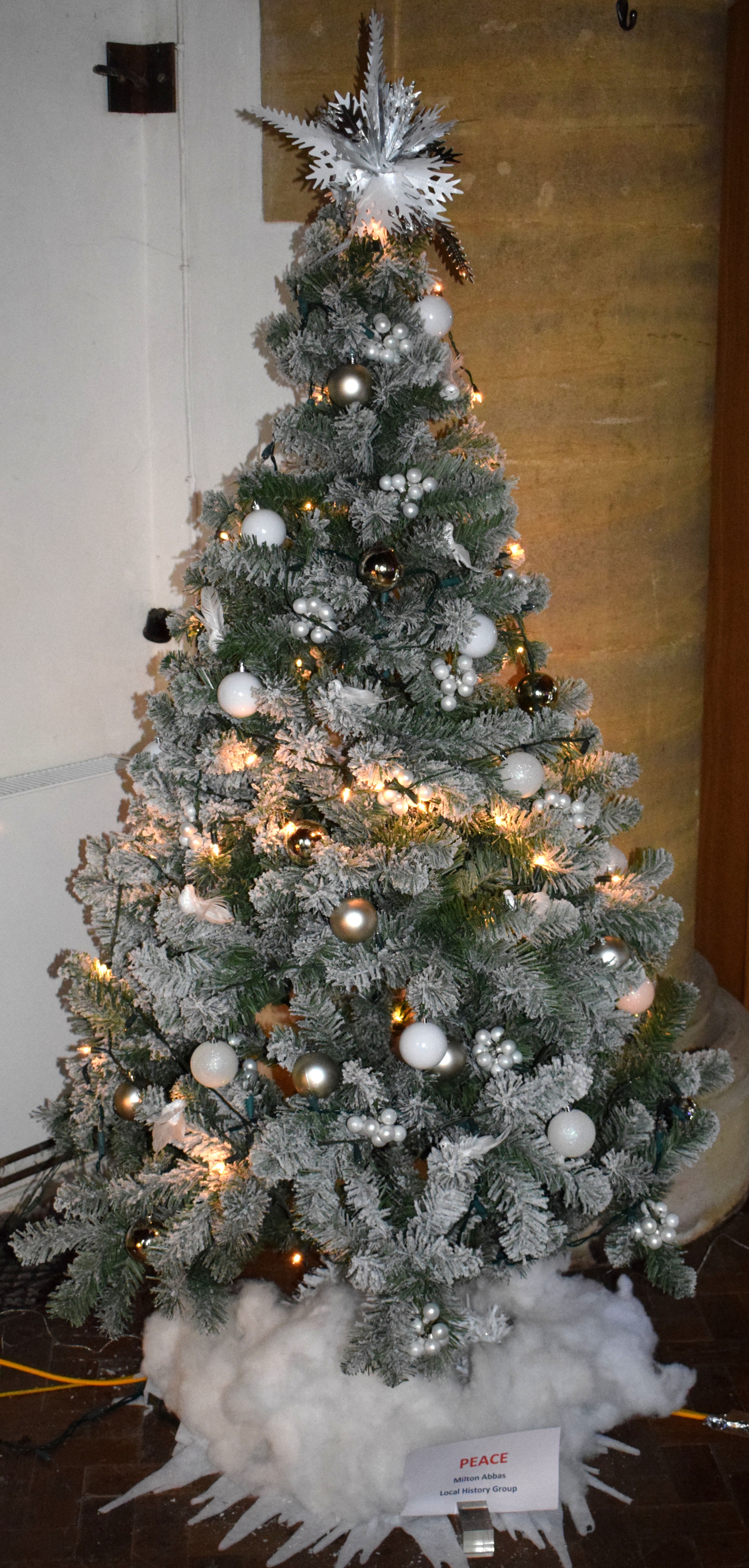
Many thanks to June McAvoy for this beautiful tree as the entry of the Milton Abbas Local History Group in the 2018 Christmas Tree Festival in St James Church, Milton Abbas.
This is a series of programmes from the BBC. One of the six episodes features Milton Abbas history.
Ben Robinson outside Milton Abbey
It is presented by Ben Robinson.
The programme has been broadcast nationally five times since its first showing in January, 2019.
It will be showing continuously at our exhibition at the Milton Abbas Street Fair Sat 27 July 2019. We have much more information than was shown on this programme, so if you want to know what went on the cutting room floor come and talk to us there.
We were delighted to have lunch in November 2018 at the newly opened and refurbished Tea Clipper. Alastair and Kathy Beaven with their daughters supplied us with a warm welcome, good coffee and a savoury cream tea.
This is a great facility for Milton Abbas and we wish them every success.
Unfortunately the Tea Clipper tea rooms closed after a few years and is now a private house – such is village life.
In the Dorset History Centre there are some bills from 1787 for Milton Abbas estate. These scraps of paper give an insight into the work that was going on, as well as the names of the labourers, and the amount earned.
This is from May 1787
it gives the dates of the work, the number of days worked and the amounts paid per day.
We now know how much a hedge layer, ploughboy, cowboy.
There are about 40 such documents. It would enhance our understanding if one of our readers would transcribe them.
Please contact us here, if you would like to help.
This is the dial of an eight day clock showing that Richard Ham was a clock maker of Milton Abbas. This image was kindly given to us by Tim Marshall author, and he has dated the clock to around 1720.
We are researching the Ham family. They were here from our earliest records 1634 through to the 19th century, and were important to the history of Milton Abbas.
She is compiling a biography of her aunt, Margaret Alice Scutt, whose third novel has recently been published posthumously. She was born in October 1905 and baptised that December in Weymouth, where her father, Tom Albert Scutt, was Schoolmaster at St. John’s.
His next post was at Milton Abbas Village School, which Margaret attended in due course.
Geoffrey Tom Scutt, and the younger sister, Lorna May, were born at Milton.
At the moment, we cannot be sure when the family moved to Milton. Kelly’s Directory of 1911 gives: “Elementary School (mixed). with teacher’s residence attached, built in 1840, for 150 children; average attendance 83 ; Tom A. Scutt, master”. The previous edition of 1907 gives the head mistress as Sarah Annie Clark.
There are no Scutt’s in Milton Abbas in the previous edition of 1907, the head mistress is given as Sarah Annie Clark.
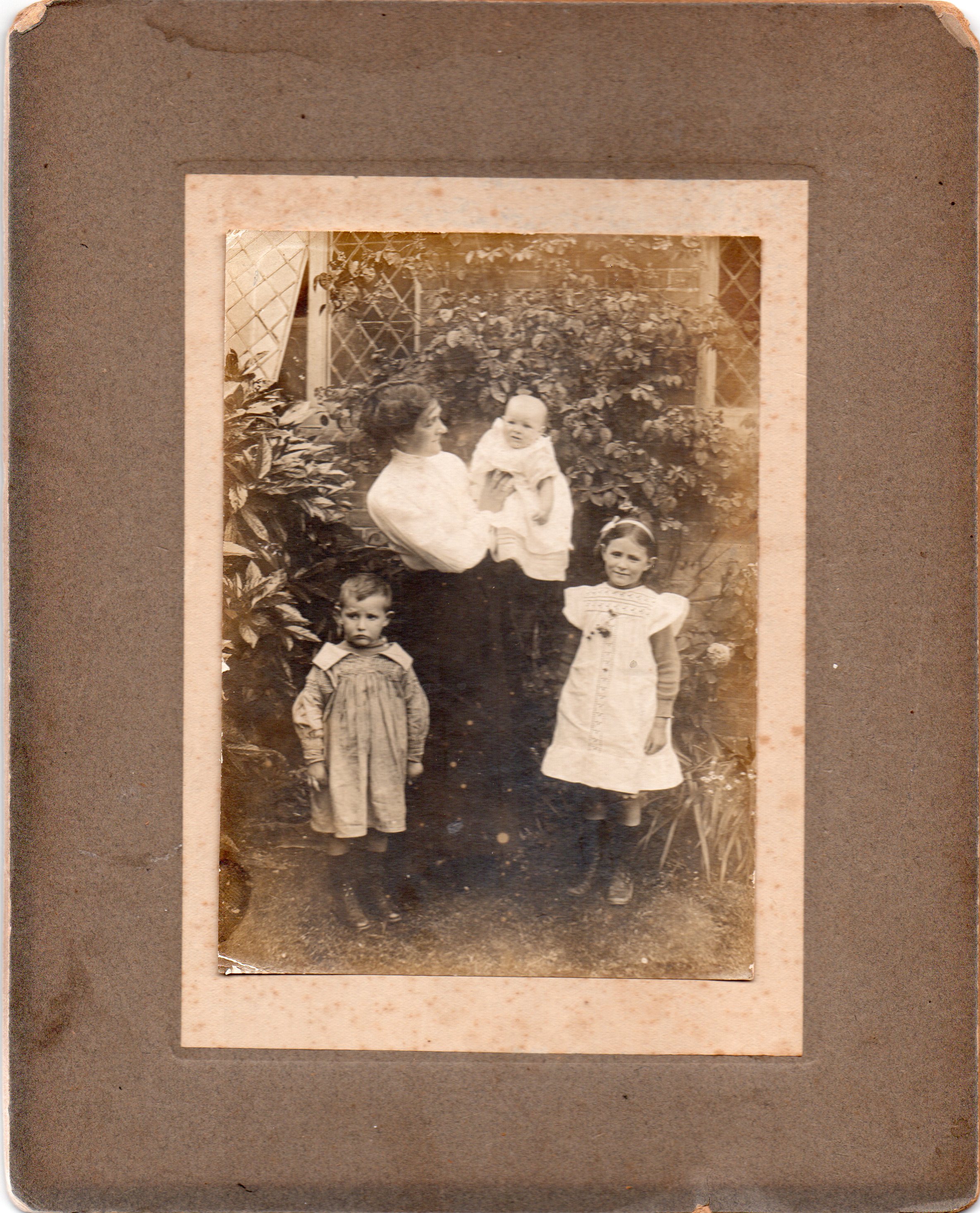
The photo shows Margaret Minnie, with baby Lorna in her arms and the other two children standing outside Milton Abbas School House, 1912.
In order to locate the key points on the Woodward 1770 survey and map, the Milton Abbas Local History Group have purchased a hand held sat nav –
We can now find on the ground, on the site of the Old Town, such places as the pound, the grammar school, Mr Harrison’s houses, the George Inn, the Red Lion, the bridge, Painters Lane, Johnsons Lane, Lord Milton’s dog kennels, and much, much more…
One of our members has now transcribed part of this book which is available on the Tipperary County Library website. We have a list of the holdings – is there a map of County Tipperary from this period so that we can locate them?
We now know that in the 1770s Lord Milton of Milton Abbas held over 16 000 acres in Tipperary and was receiving £11 000 per annum in rents, this was in addition to the £5 000 he received from his Milton Abbas estate.
The Milton Abbas Local History group are excited to announce that we have today, 14 May 2018, completed our transcription of the Overseers of the Poor Account Book 1771 – 1798, that is 275 double pages, and we now have over 18 000 records in a searchable database.
A huge thank you to a team of transcribers from Australia, Canada and England, who have dedicated hundreds of man (and woman) hours on this unique project.
These give us an insight into the social history of Milton Abbas in the second half of the 18th century, just when Joseph Damer, Lord Milton pulled down the market town they had inhabited for over 800 years, and built some cottages in a valley out of sight for his estate workers to live in.
We now have an insight into the lives of the ordinary people – their poverty, their suffering, their diseases, their hardships, and the ruin of their livelihoods. And all because that “mighty, imperious Lord” wanted a nice view from his manor house.
This is a doubly unique achievement: we know of no other lost village who have examined their history in this way, nor are their searchable transcriptions of Overseers Books.
We are a Local History Group and we undertake research into the old village, the Street and the lives of those that loved and worked there. We appreciate any help that members can provide to that end.
Family historians, please note that we do not focus on Family history’s but if you feel you could help and contribute to the social history of Milton Abbas Please get in touch.


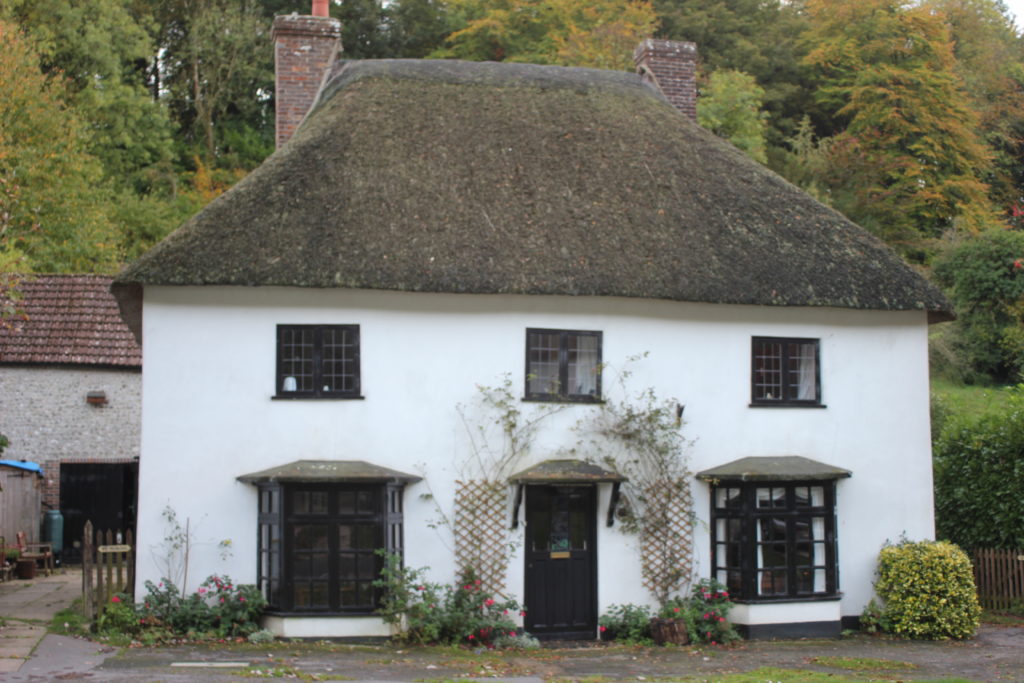 We were delighted to have lunch in November 2018 at the newly opened and refurbished Tea Clipper. Alastair and Kathy Beaven with their daughters supplied us with a warm welcome, good coffee and a savoury cream tea.